Technology & AI

←
All blog posts
The Distribution Guide

Meta has announced an important change to the WhatsApp Business API policy: starting January 15, 2026, general-purpose artificial intelligence will no longer be allowed within the platform. Chatbots similar to ChatGPT, Perplexity, or Luzia will no longer be permitted.
At first glance, this may sound like a limitation. But what is really behind this decision?
If you want to find out, keep reading 👇
Meta has added a new section to its terms specifically addressing AI Providers, making it clear that:
“Generative platforms or general-purpose assistants will be banned if their primary functionality is conversational interaction.” — El País (translated)
WhatsApp Business does not want to become a space for generic chatbots, but rather a tool focused on business communication.
No to general-purpose assistants.
Yes to specialized assistants designed for defined tasks: customer service, support, case follow-ups, and other business processes.
For the insurance industry, this news is not necessarily negative. In fact, it could represent an opportunity.
📑 Regulatory Clarity: The new rules define more clearly which use cases are allowed, prioritizing internal operations and customer service functions.
🎯 Boost for Specialized Solutions: Assistants designed for specific tasks such as claims handling, quoting, or policy renewals.
⚡ Greater Operational Efficiency: Well-designed assistants reduce errors, streamline processes, and help ensure compliance with privacy and regulatory requirements.
📈 Competitive Advantage: Companies that are already using specialized AI solutions will be better positioned in this new environment.
This is where the news hits close to home for us.
We launched Wilbert in September with a very clear objective: to automate day-to-day tasks in the insurance sector. Just one month later, Meta announced this policy change.
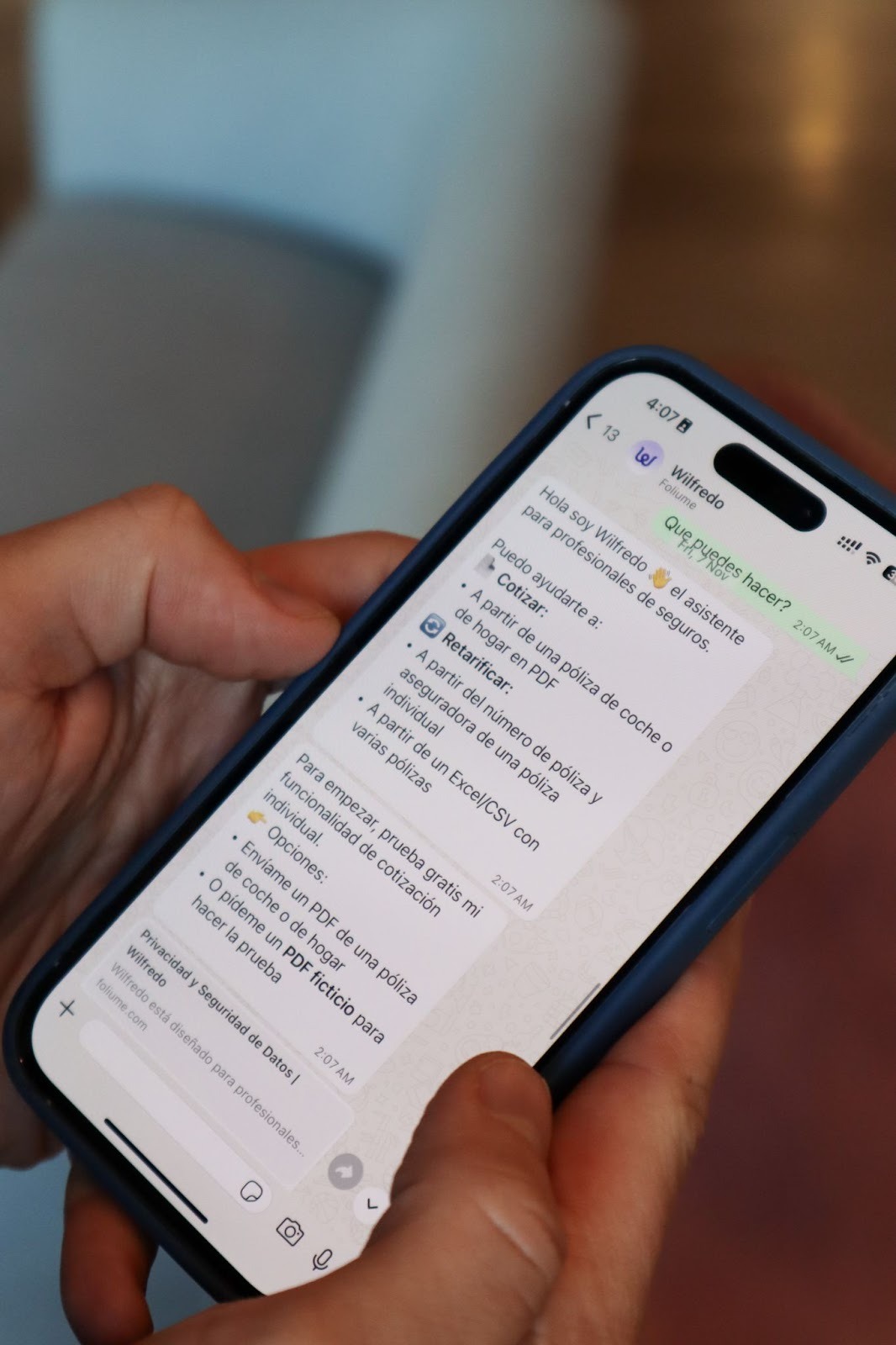
In many ways, it was reassuring. It confirmed that we were moving in the right direction.
Wilbert was never designed as a generic assistant. Instead, it was built as an AI system that understands insurance processes and helps brokers solve daily operational tasks, such as:
Thanks to its specialization, Wilbert not only complies with the new regulations but also offers a clear competitive advantage: improving efficiency, ensuring regulatory compliance, and maintaining strict control over data management.
Meta’s new policy does not eliminate artificial intelligence — it redefines how it should be used.
We are moving away from assistants that “talk about everything” toward assistants designed to solve specific business problems.
For the insurance industry, which is used to complex processes and strict regulatory frameworks, this is not a setback. It is an opportunity to invest in specialized assistants that genuinely improve efficiency and compliance.
👉 When generic AI becomes limited, tailored AI gains value.
And in insurance, that makes all the difference.
The AI platform that automates operations for brokerages, agencies, and bancassurance.


© 2026 Foliume SA. All rights reserved.